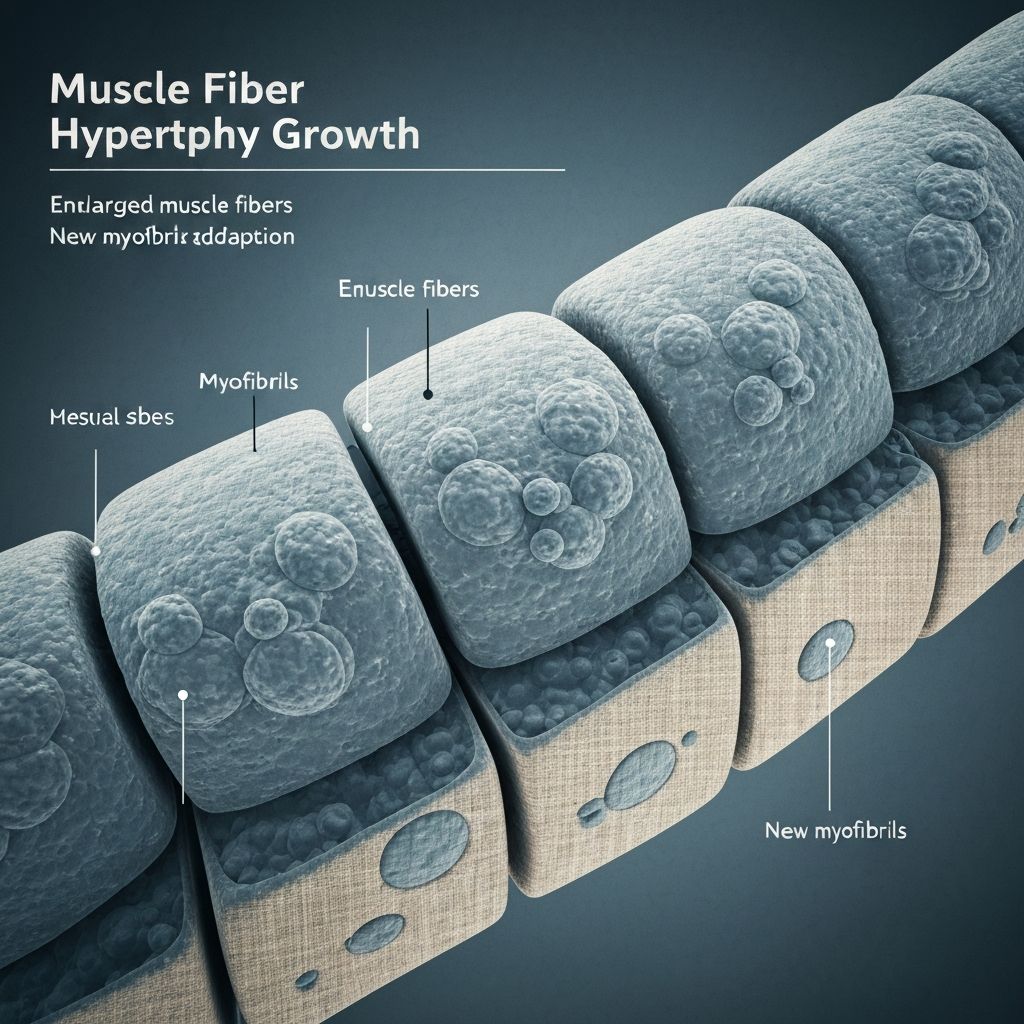
Chronic Adaptations and Muscle Growth Responses
Intervention studies tracking changes in muscle tissue over weeks to months consistently document increases in skeletal muscle mass in response to progressive resistance training across diverse populations. This article synthesizes research on the mechanisms, magnitude, and population variation in muscle hypertrophy (growth) adaptations to resistance training based on published intervention trial data.
Measurement of Muscle Growth
Research quantifies muscle growth using several measurement approaches. Whole-body lean mass is typically assessed using dual-energy X-ray absorptiometry (DXA), magnetic resonance imaging (MRI), or bioelectrical impedance analysis (BIA). Regional measurements such as upper arm or leg circumference provide additional information. Muscle cross-sectional area can be directly measured using MRI or ultrasound imaging. Muscle biopsy studies examine histological changes at the fiber level. Each measurement approach has advantages and limitations regarding precision and practicality.
Typical Magnitude of Muscle Gains
Meta-analyses synthesizing findings from numerous intervention trials suggest that untrained individuals engaged in progressive resistance training typically gain approximately 1-2 kilograms of lean mass over 8-12 weeks of training, with considerable individual variation around these averages. Longer studies (6-12 months or more) document continued lean mass gains, though the rate of gain typically slows over time as individuals approach their genetic potential. Trained individuals show smaller gains than untrained individuals over similar timeframes. Older adults generally gain less lean mass than younger individuals but still show measurable adaptation.
Mechanisms of Muscle Hypertrophy
Muscle growth results from imbalance between protein synthesis and protein breakdown, with net protein synthesis exceeding breakdown. Resistance training triggers signaling pathways including mechanotransduction (cellular response to mechanical loading) that activate protein synthesis. The mTOR (mechanistic target of rapamycin) pathway represents a key regulatory system controlling cellular growth. MAPK pathways also contribute to adaptation signaling. Adequate protein availability, sufficient energy intake, and recovery time all support protein synthesis processes necessary for muscle growth.
At the fiber level, muscle growth occurs primarily through hypertrophy (increase in individual fiber cross-sectional area). Hyperplasia (increase in fiber number) may occur in some populations, though this contribution to overall growth is typically modest. Type II (fast-twitch) fibers generally show larger growth responses to resistance training than Type I fibers.
Factors Influencing Response Magnitude
Training experience strongly predicts response: novices typically show robust lean mass gains while highly trained individuals show slower gains. Training volume and intensity both influence responses, with generally stronger responses to higher intensity and adequate volume. Rest interval structure and training frequency matter. Nutritional status, particularly protein intake, influences muscle growth capacity. Age affects response rate, with older adults showing slower adaptation but still capable of significant gains. Sex differences exist: testosterone levels influence growth rate, with males generally showing faster gains than females, though both sexes adapt substantially.
Long-Term Sustainability and Plateaus
Resistance training produces continued lean mass gains over years, though the rate of gain decreases over time as individuals approach their genetic potential. This represents a natural physiological ceiling based on individual genetic factors. Some individuals show greater absolute gains than others despite similar training. Cessation of training leads to gradual loss of gained lean mass, though the rate of loss is slower than the rate of gain. Maintenance requires continued training.
Disclaimer: This website provides general educational information only. The content is not intended as, and should not be interpreted as, personalised exercise, training, or health advice. For personal activity decisions, consult qualified healthcare or exercise professionals.
Conclusion
Intervention trials consistently document that resistance training produces increases in skeletal muscle mass across diverse populations. The mechanisms involve complex cellular signaling pathways and depend on multiple contextual factors. Individual variation in response is substantial. Understanding these adaptations represents important knowledge about human physiology.